Tuesday, March 17, 2009

Rachel Getting Married (2008)


2008’s Rachel Getting Married is a drama about a group of upper-class New Englanders coming to terms with their past during the wedding of the family’s eldest daughter. It’s a movie where the cliches are rolled out one after another. Parental divorce, addiction, sibling rivalry, a death that’s never been properly confronted-- it’s all here, and very little of it is even presented in any way that complicates what we’ve already come to expect from this type of film. The only unexpected thing about Rachel Getting Married, then, is how unusually well director Jonathan Demme and screenwriter Jenny Lumet (daughter of Sydney) make these old standards operate within the framework of their story. For its first half, the movie almost works well enough to restore faith in the power of the dysfunctional family melodrama, but it quickly loses steam an ends up more like an updated version of Ordinary People with music. Lots and lots of music.

The story, as expected, is pretty simple. Kym (Anne Hathaway), a young woman with a history of drug abuse, is let out of her latest rehab institution for the weekend to attend her sister Rachel’s wedding. Conflict ensues, of course, and over the course of a very long few days a number of familial issues are brought to light and confronted. Where the movie works where so many of its kind fail, at least in the early running, is in the way that the conflict manifests itself. When Kym shows up at the house, we expect her to barge in like a force of nature and immediately start shaking things up. But the filmmakers don’t go for these kinds of easy setups. Things start out normal, and Kym, though she clearly has problems, is actually rather pleasant and likable, and even her relationship with Rachel seems pretty stable. Her issues are much more insidious, though, and it quickly becomes obvious that Kym resents the attention being showered on her sister. This tension finally comes out during a toast at the rehearsal dinner that, though a bit over the top, is notable for being at the same time relatively innocuous and unbelievably hard to watch.

Scenes like this one and the epic argument that follow it back at the family’s house are where Rachel Getting Married is at its best. Rarely does the conflict in these types of films arise so naturally and organically out of the situations. Usually it devolves into actors competing to see who can deliver their lines with the most venom, but here the arguments feel all too real. A lot of credit should go to Hathaway, who wisely holds back enough that Kym never feels too much like a caricature, but I was also very impressed with Rosemarie DeWitt as Rachel and Bill Irwin as the sisters’ mild-mannered father Paul, who has the unenviable role of playing referee in most of the conflicts. The scenes between the family are unbelievably tight in their execution, but never in a way that seems over-rehearsed, and most of all, the script lets the story come out of these characters and the ways they clash rather than vice versa.

Demme films all this in that jittery handheld video style that I have time and again railed against, but here I have to admit that it adds an element of immediacy that might not have been there otherwise. He just might have hit on the perfect use of the handheld style (something that John Cassavettes realized 30 years ago), and it helps to add a fluidity to scenes that could have come off all too much like theater.

The problem is that beyond this opening conflict the film has very little to offer beyond reverting to a number of Lifetime-channel cliches and confrontations that, if not delivered by such superior actors, would seem laughably juvenile. Near the end of the film, things get rather repetitive, and it eventually becomes frustratingly obvious that what we have here is the content of an excellent short film stretched and padded to feature length. Demme tries to combat this by including several documentary-style scenes of the wedding activities. There are toasts, speeches, and dinners, but outside of a few cut-ins of Kym looking troubled, they add absolutely nothing to the actual story. When it came time for the actual wedding ceremony I was truly hoping that he would cut around it. No such luck.

And then there’s the music. Scene after scene of it, throughout the movie. It’s all played by wonderfully able musicians in a number of genres, but beyond making me wonder where I could get a hold of some of these songs it has no effect whatsoever on the experience of the film’s story. Demme made Stop Making Sense. We know he can shoot the hell out of a musical performance, but in the context of the film these otherwise cool scenes are nothing more than filler.

Maybe ditching these scenes and extending the actual story of Rachel Getting Married would have made it one of the more hard-hitting films of last year, and maybe it would have watered everything down to the point of unwatchabilty. It’s hard to say, but the point is that Demme and Lumet seemingly didn’t try, they just got in contact with some good musicians and let them go crazy. Watched alone, I’d wager that the few good scenes of familial conflict rank among the best of last year. They are heartbreakingly incisive, and hit all the right notes that you look for and so rarely get in a movie like this. But in the film’s second half everything just sort of devolves into a half-baked concert film/wedding documentary. All these scenes pile on one another to the point that by the end of Rachel Getting Married, you feel as though you’ve actually attended the wedding, and the supposed family drama seems less like the actual story and more like an embarrassing scene you stumbled upon while you were waiting to get another drink.

Friday, March 13, 2009

Let The Right One In (2008)


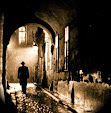
The expertly constructed Swedish vampire film Let The Right One In is one of those rare movies that is more notable for what it suggests to its audience than what it actually shows them. Director Tomas Alfredson’s film just may be the best shot movie of last year, and the style he employs is at times so slight and subtle that the smallest look or gesture is able to speak volumes about its characters and their bizarre relationship. This is certainly a horror movie, faithful to the mythology of the vampire and with several striking scenes of violence, but at its heart it is one of the more keenly observed films about human relationships to come along in some time.

The story follows 12-year-old Oskar, a young boy living in a suburb of Stockholm in 1982. Oskar is an outsider at his school, where a group of bullies is constantly terrorizing him, and even more alienated from his parents, who are separated and seem to have very little to do with him. He is seemingly alone in the world, until he meets Eli, a girl his age who has just moved in next door. Eli is certainly strange-- she doesn’t go to school and only seems to come around at night, and her arrival coincides with a series of grisly murders in around the town-- but Oskar is happy to have a friend, and eventually asks if she’ll be his girlfriend. She hesitantly agrees, as long as he realizes that she’s “not really a girl.” Soon the two are spending as much time together as they can, and Eli is coaching Oskar on how to fight back against his tormentors.

Oskar’s reaction to learning that Eli is a vampire is certainly unexpected, and moves the story toward its more surreal final third, but it works because of how well-constructed the dynamic between the two is, and how natural their interactions have been to that point. The majority of the credit should go to the wonderful young actors playing the duo, Kare Hedebrant and Lina Leandersson, but the film’s script, adapted by John Ajvide Lindqvist from his novel, is also spot on, and features some of the most beautifully simple dialogue I’ve heard in a while. Take the oddly funny scene where Oskar, upon learning that Eli is indeed a blood-drinking vampire, asks her how old she really is. “I’m twelve,” she insists, “but I’ve been twelve for a very long time.”

Director Tomas Alfredson’s style is impeccable, and is a big part of what makes the film’s meaning so rich and multilayered. He makes use of a largely static camera to capture the unusually foreboding backdrop of the town, often using long shots to let the atmosphere swallow up the characters. After watching the film, one can’t imagine the Swedish landscape, with its snow covered streets and pitch-black night skies, being shot any differently. The comparison to fellow Swede Ingmar Bergman is probably too easy, but Alfredson’s camera seems to capture the film’s landscape and the faces of its characters with the same kind of emotional intensity that makes films like Winter Light so memorable, and like Bergman he delivers several beautifully composed shots that will stay with the viewer long after the film is over. His deliberate pacing is also Bergman-esque, but it is punctuated by some staggeringly brutal scenes of violence that rival some of the horror genre’s masters in their originality and intensity. Alfredson handles these scenes with a matter-of-fact kind of style that lends an elusive quality to the violence. Avoiding the quick cuts and shaky camera that plague so many American horror films, he uses long shots in these scenes to place the viewer at a distance and give the odd feeling of being a witness to the killings, which unfold with the speed and ferocity of an animal attack.

Outside of these scenes, the pacing and style of the film is quite subdued. Alfredson feeds the audience very little through dialogue, and his directing style might as well be a master course on how to tell a story visually. Every scene is altered and the surface meaning complicated by a simple shot or a cut scene, and as the film progresses we begin to see that the seemingly innocent relationship between Oskar and Eli is becoming more and more clouded.

Still, in the end it is this relationship, in all its complexities and terrifying implications, that makes Let The Right One In work so well. Eventually, we begin to see that the title doesn’t just refer to the old lore that a vampire must be invited into someone’s home before they can enter it, but also to the interaction between the two main characters, who are slowly letting another person truly know them after a life of feeling alone. Oddly, and despite all the gothic trappings that come along with being a vampire story, Let The Right One In is at its heart an elegantly simple film about two outsiders finally finding a person they can relate to, and it’s this emotional core, twisted though it may be, that grounds the film and makes the fantastical elements seem all the more natural.

TRAILER:

Monday, March 2, 2009

Choke (2008)


Choke is the latest adaptation of a novel by Chuck Palahniuk, the author of Fight Club. Palahniuk is known for his mind-bending stories and his black humor, so it’s no surprise that the plot of Choke is appropriately bizarre, following sex addict Victor Mancini (Sam Rockwell), who when he isn’t looking for his next hook-up is trying to work his way through the twelve steps (he’s been stuck on number 4 for a while), though it seems that every time he attends a meeting he ends up slipping away to a closet or a bathroom with the girl he’s supposedly sponsoring. Victor works as a “historical interpreter” at a colonial theme park by day and as a sort-of con man by night, intentionally choking in restaurants and hoping to be saved by rich people who, in order to “relive their savior experience,” will keep in touch and sometimes even send money. He does all this to help pay for his long-suffering mother (Anjelica Huston) to stay in a care facility for the mentally ill.

If that schizophrenic plot summary doesn’t make it clear enough, Choke is a movie where the plot is constantly moving in frustratingly nonsensical, thematically divergent directions (and that’s leaving out the subplots). Maybe in the book Palahniuk makes it all work (he’s always been on my “life is too short to read...” list), but on screen the story practically screams with dissonance. This movie, written and directed by character actor and first-time filmmaker Clark Gregg, is simultaneously a comedy, an addiction movie, a “head trip” movie a la Fight Club, and a drama-- which would be fine, if any of those elements cohered into anything remotely resembling a watchable story. There are a few clever scenes, most of which take place at the colonial theme park and concern Victor’s boss Charlie (played by Gregg), who is a stickler for 1700s accuracy, but after a funny start the movie becomes more droll than anything, and like all Palahniuk stories, seems to try too hard to be disturbing and unusual. By late in the film, even a scene where a woman asks Victor to “pretend” to rape her seems like nothing more than a pitiful attempt to get nervous laughter.

The film falls even flatter as a drama, suffering from that same inertia-destroying compulsion to revert to childhood flashbacks to explain every little adult problem that has plagued and destroyed so many an otherwise adequate film. And as for the plot-twists, they seem very forced and very obvious, as though the movie is trying to be like Fight Club in that “nothing is what it seems" sort of way despite lacking any of that film’s energy or inventiveness.

Rockwell is growing on me as an actor, and he’s perfectly fine as Victor, bringing just the right kind of sarcastic detachment and absurdity to a character that would otherwise be very hard to sympathize with. The real disappointment is Kelly MacDonald, who has been almost universally good throughout her career, especially in 2007’s No Country For Old Men, but who here seems to be so obviously acting that it becomes almost painful to watch as she recites line after line as though it’s written on a cue-card off screen. A late plot twist slightly exonerates her, but even this (which anyone should be able to spot a mile away) would have worked better if she had been even the least bit convincing in her role. Angelica Huston, as always, displays more acting skill in a few scenes than most do in their whole career, but after suffering through The Darjeeling Limited, I’m starting to get sick of seeing her show up as the eccentric mother in movies that try painfully hard to be offbeat. She could do much better.

In many ways, I’ve started to see Palahniuk’s Fight Club as a good movie that was bad for movies in general. Ever since Tyler Durden was introduced to the world, every other film that comes out has some last-minute rewrite of the story, where everything in the previous 90 minutes is rendered moot and useless by the sudden revelation that “it was all a dream” or “he was dead all along.” Choke doesn’t pull the rug completely out from under its audience to that degree, but it’s still ultimately a cheat, the same kind of hustle that Victor pulls on unsuspecting restaurant patrons. If Fight Club was the high point of Palahniuk’s trademark style brought to life on screen, then let’s hope that Choke is as low as it gets.

Thursday, February 19, 2009

Blindness (2008)


One of the easiest criticisms of movies based on novels is that they pale in comparison to their source material. The book is always better than the movie, and the most common reason is that filmmakers take liberties with the author’s vision, adding scenes, dropping characters, and playing fast and loose with story to the point that the finished product sometimes resembles its predecessor only in name (see I Am Legend). City of God director Fernando Mereilles' film Blindness, an adaption of Nobel Prize winner Jose Saramago’s novel of the same name, bucks this trend by staying rigidly faithful to the novel. The film’s script, by Canadian cult figure Don McKellar, works exclusively within the framework of Saramago’s story, only dropping the smallest of scenes in the interest of time. Blindness is one of the most faithful adaptations of a novel I’ve seen, and oddly, it’s all the worse for it.

Both the film and Saramago’s novel, which was considered by many (I would now say correctly) to be unfilmable, depict a sudden and unexplainable epidemic of “white blindness” that befalls an unnamed country. We follow a select group of characters, among them an ophthalmologist and his wife (Mark Ruffalo and Julianne Moore), a prostitute (Alice Braga), and an Old Man (Danny Glover), who catch the disease, which manifests itself as a milky whiteness rather than the blackout traditionally associated with blindness. They and others with the sickness (the rapid spread of which is conveyed in a chilling montage in one of the film’s better moments) are soon quarantined by the government and confined to a dilapidated mental institution with the warning that anyone who tries to leave will be shot.

Saramago’s story is shamelessly allegorical (which explains the purposely nebulous setting and the refusal to give the characters names), and this unfortunately means that the narrative unfolds with very few surprises. The government’s fear of its people and subsequent reaction, the lack of any kindness toward the sick--these are all pointed and calculated attempts at creating a moral fable. These are all too common in literature, and all too easily botched onscreen because of how rote they can be. So it’s not unexpected that what has started out as a kind of science fiction tale soon becomes a modern attempt at Lord of the Flies. The blind, crammed into tight quarters and forced to live in filth and squalor with little food, quickly become degraded to extreme levels. Soon, a former bartender (played with a wicked energy by Gael Garcia Bernal) has formed a gang and proclaimed himself “King” of the ward, hoarding the supplies and demanding payment-- money, jewelry, and eventually women-- in exchange for food.

The small group of characters at the center of the film are alone, their only help the doctor’s wife (Moore), who has miraculously retained her sight but went to the ward anyway to avoid abandoning her husband. She is the center of the film, alone in witnessing the wretchedness and the degradation of her fellow detainees. As could be expected, Moore is excellent in the role, and along with Garcia Bernal she is the most effective at creating a believable character out of a two-dimensional symbol. She is one of our very best actresses, and it’s no surprise that she takes the challenge of being the eyes of the audience in stride, even as her character is repeatedly put through hell. In fact, the cast here is universally fine, especially Danny Glover, who, though underused, makes the most of his role as a lonely man who finds solace in the makeshift family that is formed as the characters move through the post-apocalyptic conditions of the film's final third.

The problem is that beyond these extremes of human suffering and the tired and obvious parable of the frailty of human civilization, there just isn’t all that much on display in Blindness to make it worth enduring. The great accomplishment of Saramago’s novel is the rhythm he finds in his prose of telling a story without much visual description, of starkly recreating the feeling of being adrift in a sea of sounds and voices with no spatial or visual referents. This is obviously something a film director, especially one as in love the beauty of images as Ferandno Meirelles, will never be able to recreate onscreen, and so it’s no surprise that the film becomes relentlessly tethered to the doctor’s wife at the expense of everything else. Meirelles’ camera is precise and fluid, and outside of a few too many intentionally blurry shots (are these people blind, or just nearsighted?) the cinematography is impeccable. But beyond being slick and well composed, his shots reveal little emotional truth about his characters or their plight. The film’s handling of sound, on the other hand, is appropriately acute, especially the excellent music by Marco Antônio Guimarães. One scene in particular finds the detainees, exhausted and hungry, listening to some music on the Old Man’s radio. The simple beauty of the scene, which comes at one of the most trying moments of the film, lies in their newfound appreciation of the sounds, which seem to echo on some primordial level.

But this kind of profundity is scarcely found elsewhere in the film, which falters in its pathological loyalty to a story that was already too literary for its own good. Saramago’s book was told from the point of view of an omniscient narrator with a particularly cynical view of the world who would comment and even make light of the human failings and the folly that the characters displayed, often going off on lengthy tangents to make a philosophical point. Without the use of constant narration, this is something that a film simply can’t recreate (this is certainly not a new criticism-- fear of similar disconnect is why I'm still avoiding seeing Revolutionary Road.) We learn so little about the characters in Blindness, not even their names, and as an auteur Meirelles seems to have little to say about the world he creates. This leaves only the depravity, which is certainly disgusting and deplorable, but not even in a shocking enough way to be memorable or haunting. And all of this because the filmmakers, to their credit, tried to honor the material they were working from. I say it with hesitation, but it seems the best thing for Blindness would have been to play as fast and loose with the content of the book as was legally possible.

Tuesday, February 10, 2009

Herzog and Lynch's Horror Film

If you're like me, that title alone was enough to get you excited for My Son, My Son, What Have Ye Done?, a new film to be directed by Werner Herzog and produced by David Lynch that's set to start shooting in March. Not only does this project find three of my favorite aspects of movies (Herzog, Lynch, and Horror) colliding into one epic storm of weirdness, but according to this article, the cast is slated to include Willem Dafoe, Michael Shannon, and-- believe it-- Udo Kier. Herzog has definitely made some weird choices of late, not least of which is his upcoming "reimagining" of Bad Lieutenant with Nicholas Cage and Val Kilmer, but for me, this is definitely the most exciting. Check out this interview with Herzog for more details about this, his hatred of film professors, and his upcoming book.

Tuesday, January 27, 2009

Standard Operating Procedure (2008)


Errol Morris’ recent film Standard Operating Procedure, which studies the now famous pictures of prisoner abuse and torture at Abu Ghraib, is one of the most stone-faced, impenetrable documentaries that I’ve seen in a long time. You can’t fault Morris for trying to maintain an austere tone in the face of such troubling material, but the coldness of the film, his oblique approach, and the intellectual distance that he maintains from his subject are what ultimately make his argument so inaccessible.

I get his basic premise: that photographs never tell a whole story, that they are half-truths frozen in time. The conditions in which a picture are taken-- what lies outside the frame-- are just as important as what we can see. We get some of this from interviews with the accused soldiers, who range from pleading and insightful to downright naive, but Morris undermines any argument he might have by refusing to prove or refute anything. In taking what the soldiers say at face value-- from the convincing and chilling revelation that the soldiers were ordered by the CIA to be hard on detainees to “soften them up” for interrogation, to the now-infamous Lyndie England’s lame excuse that it was all her ex-boyfriend's fault-- he ends up leaving us even more baffled and confused than we were before we saw his film.

And maybe that’s exactly the point. Morris’ only goal here is to make people at least hesitant to judge the veracity of a charge or an event based on photographs that only tell a small piece of the story. Ultimately, his interest in Abu Ghraib is academic. He’s not trying to tell a story here-- he’s just trying to illuminate an abstract idea.

This revelation aside-- which, let’s face it, should already be obvious to anyone who knows the least bit about film or photography, or has ever used Photoshop-- Standard Operating Procedure is still hurt by its relentless meandering. See it for its interview with a wise, seasoned interrogator who puts the whole Middle East situation in perspective, as well as for the gorgeous slow motion photography and Danny Elfman’s haunting score. Just know that it’s not half as enlightening as The Fog Of War, as touching as Gates Of Heaven, as clever as Fast, Cheap, and Out of Control, or as absorbing and important as The Thin Blue Line.

Wednesday, January 21, 2009

Armond White's Better Than List 2008

I'm not really quite sure what's happened to New York Press film critic Armond White over the last year or so. Even though I've been on board with a lot of his contrarian opinions (hating The Dark Knight) and agree with him about many of the films he supports (Shotgun Stories), the man really seems to have gone off the deep end lately, to the point that the majority of his reviews test the limits of readability. Still, even though there is a lot of Armond-hate out there, I still have an odd respect for the guy, which brings us to his 2008 Better Than List. This is a piece he's been putting together for the past few years, where he gives you ten movies that mainstream critics have been praising and then explains why his choices are better. As usual, he borders on incoherency, but a few of his choices are interesting, like his recommending Steven Chow's CJ7 over Wall-E. I can't get behind his shameless Spielberg-promoting (Indiana Jones 4 is a terrible, terrible movie), but his praise for RocknRolla and Transporter 3 does make me a bit more excited to check those films out. Check out the list for yourself. The indignation of the commenters alone is worth the price of admission. As an added bonus, take a look at Jim Emerson's response to White's list, which is a pretty funny examination of Armond's often impenetrable prose.