Monday, June 23, 2008

The Lure of Decadence: Light Sleeper (1992)


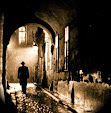
Aside from catching the same twenty minutes of Affliction on TV over and over again, Light Sleeper is the first of Paul Schrader’s directorial efforts that I’ve seen. Oddly enough, I’ve always been more familiar with his writing about film than his actual filmmaking. He’s an admirable talent in the field of film criticism, but now I can see that Schrader (who wrote Taxi Driver and has directed films like Auto Focus and American Gigolo) is able to bring the same deftness and elegance to his films that he brings to his prose. Light Sleeper, a strange, classically-plotted tragedy, is a good introduction to his work that has me wanting to go back and see as many of his films as I can get my hands on.

The movie stars Willem Dafoe as Johnny LeTour, a high-class cocaine dealer in New York City. Even though he’s long since kicked the habit himself, the aging LeTour has remained in the employ of Ann (Susan Sarandon), a charming lady-druglord whose rise to the top and knack for avoiding arrest have led to her being something of an underground legend. But despite Ann's notoriety, she and LeTour and her other associates don’t live any kind of glamorous Scarface-esque lifestyle. Schrader, who supposedly based his characters on real drug dealers he knew in NYC, portrays them as pragmatic businesspeople: they operate out of a small but classy apartment, and when not cutting product they spend their time ordering takeout and discussing their stock portfolios. In fact, Ann has long been planning to shift from distributing illegal substances to cosmetics, a move that has left LeTour with the helpless prospect of future unemployment.

Unable to sleep and haunted by his looming future, Johnny is shocked when he has two chance encounters with Marianne (Dana Delaney, whom guys from my generation will probably always remember from Exit to Eden), his long-lost love from his drug years. To compound the many changes in his life and his serendipitous reunion with Marianne (who rejects him as a bitter memory of her past), Johnny also finds himself the unwitting pawn in a murder investigation involving Anne’s “ecstasy connection” Tis, a bind that leads to the insomniac drug dealer being tailed by a New York City detective.

In addition to this nicely complicated and intriguing plot, Light Sleeper brings with it the all-too-rare pleasure of being able to watch Willem Dafoe carry a film. He’d proven himself as a reliable supporting player for years before this movie in films like Platoon and the campy-but-irresistible To Live and Die in L.A., and here he shows again why he’s so valuable. Despite being one of the most naturally creepy actors this side of Christopher Walken, he manages to wrangle a great deal of sympathy and understanding for LaTour whenever a scene requires it. It’s definitely to his credit that he manages to make the character of a shrewd drug dealer appear naive and almost innocent at times, especially in the scenes between he and the always excellent Susan Sarandon (whose run in the eighties and nineties-- from Atlantic City to The Hunger to Bull Durham-- continues to impress me).

In addition to the great chemistry between Dafoe and Sarandon, Light Sleeper also features some excellent (and truly bizarre) supporting performaces. Victor Garber, an underappreciated actor probably best-known as the ship designer from Titanic, is convincingly smarmy as the upscale drug user and dealer Tis. His character is Ann and Johnny’s best customer, a European party boy who frequently finds himself in binds when his young consorts end up OD’d and in the hospital. An even odder (albeit brief) role is played by a young David Spade, as one of Johnny’s whacked-out customers. Credited as the “Theological Cokehead,” Spade’s character spouts theories on the ontological argument for the existence of God while he snorts lines and says things like “do you ever think your whole life was just a tape, and somebody pushed play... and it’s just running?

One of my only major complaints with the film concerns (and it often does) the overuse of music. Maybe my love for No Country for Old Men’s minimalist score has made me biased, but it seems that Light Sleeper, like so many films, is redundant and excessive in its use of music, and the result is that the film seems dated when it shouldn’t have to. I’m convinced that the easiest way to stamp your film (for better or worse) as a relic of a particular time is to overuse popular music. Here, Schrader keeps annoyingly reusing the same Springsteen-ish sounding song by The Call, and when he’s not playing that, he fills the soundtrack with the same kind of lonely-sounding saxophone that seems to show up in every film about the mean streets of New York City. Not only is this kind of stuff cliche, but it runs in opposite direction from the rest of the movie, and it frequently threatens to undo otherwise excellent scenes with its mawkishness.

Still, Schrader’s craftsmanship is quite admirable. He’s a fine writer of dialogue, and he takes one of my favorite approaches to filmmaking: he follows a classical framework and structure, but allows the content to be fresh and shocking--a technique that works to create a certain kind of dissonance in the mind of the viewer. Schrader's a good enough writer that he doesn’t need any kind of fancy narrative tricks to enhance the plot, and as a director he includes some nicely subtle elements (like the garbage strike going on from the film’s start that has trash bags stacked on the street) that give the city an even seedier feel and mirror LeTour’s cluttered mind. The stakes keep getting higher and more tangled, and when things finally reach the level of violence, it’s as brutal and shocking as the famous scene at the end of the Schrader-penned Taxi Driver.

Light Sleeper reaches what for me is a perfect ending about 98 minutes in. The problem is that the film then continues on for another five minutes after that. It seems to me that all of the information in the last scene could’ve easily been placed elsewhere in the movie without much trouble, but then again I’m a sucker for abrupt, slightly-unresolved endings, and I can see how for some the actual last scene may make the film feel more cohesive. Either way, this was an impressive introduction to Schrader’s career. I’ve often heard his work described as flawed, but solid, and that is probably the best way to describe Light Sleeper. It’s a neglected, imperfect film, but it’s also a fine showcase of the particular talents of its star and its director.

George Carlin: Modern Man

George Carlin died yesterday of a heart attack at age 71. As strange as it may sound, I can credit him as having about as big an influence on me as any artist or actor. Even when I was nine years old and knew nothing of his comedy I was a big fan of his sitcom, to the point that when I got a dog I named it Miles because that was the name of Carlin's dog on the show. Later, when I was twelve or thirteen, I remember seeing one of his comedy specials on HBO and being both shocked and delighted at how honest and incisive he was. Just seeing that there were people like that out there that were willing to question and even ridicule the hypocrisies and inconsistencies of human behavior had a big affect on me then, and probably still figures in the way I think today. Here was a guy who was willing to challenge any social institution or tradition, from the nature and quirks of language all the way up to American hegemony and the existence of god. That's a hell of a lot of ground for a popular comedian to cover. My favorite thing about Carlin is that no one was safe from his mockery. Even if you were a fan that agreed with his general point of view, there would always be a point in his act where you too would be burned. That, to me, is the sign of a great satirist. It's been said before that comedy is the last great refuge of the noncomformist mind. I tend to agree-- and you won't find a better example of it than in the career of George Carlin.

Here he is doing a great little monologue from a couple of years back:

Friday, June 13, 2008

Your Brain On Movies

This article and others like have shown up everywhere lately, but I thought I'd post it anyway in case anyone hasn't seen it yet. Recently a group of neuroscientists studied the brain waves of test subjects as they watched a number of different film clips. What they found was that certain films seem to exert more control over the mind than others, forcing the viewer to react to them in a certain way. Not surprisingly, the work of Alfred Hitchcock scored as the most manipulative on the brain. His absolute mastery of the photography and narrative of his films is already well established in film studies, and now we even have hard science to back it up. Evidently, the studios are already studying this information quite carefully, as, I'm sure, is everyone in advertising.

Thursday, June 5, 2008

"What Do We Do With Time?": Youth Without Youth (2007)


Youth Without Youth, Francis Ford Coppola’s return to the screen following a ten-year absence, is a film overflowing with ideas, questions, and paradoxes. Ostensibly the story of an elderly academic who, after being struck by lightning, inexplicably begins to age in reverse, the film is a strange and often delightful patchwork of the historical drama, sci-fi thriller, philosophical treatise, and even the superhero movie. The trick of the film is that Coppola-- whose uneven career post-Apocalypse Now makes it easy to forget just how good he really is-- manages to balance and interweave these disparate elements so well that the story rarely feels excessive or weighed down. After we become accustomed to its strange rhythms and deliberate pacing, it establishes itself as a welcome and quite remarkable addition to a career that already includes quite a few substantial achievements.

Based on the novel by Romanian philosopher and professor Mircea Eliade, the film spans nearly forty years in the life of Dominic Matei (Tim Roth), an elderly scholar of language in pre-WWII Romania. At the film’s opening, Matei is contemplating suicide following the death of the love of his life and several failures in his studies in linguistics. After he is struck by lightning, he suddenly begins to age in reverse. But the changes aren’t just superficial. Along with his newfound youth, Matei receives an amazing increase in his cognitive powers that includes a memory “unbelievable” in its retention, the ability to intuit the knowledge contained in books without reading them, and telekinesis. In a nice touch, he is even forced to invent a new language in order to encompass the complexity of his thoughts. These amazing abilities attract the attention of doctors across Europe-- as well as the Gestapo and Nazi practitioners of eugenics-- so Matei soon finds himself on the run, eventually settling in exile in Sweden, where he tries to lay low while perfecting his theories on the origin of language.

Like Anthony Hopkins’ 2007 directorial debut Slipstream (which would make a nice--if not overly perplexing--double feature with this film), Youth Without Youth is at its heart an Old Man’s Movie. It is preoccupied with questions of memory, dreams, time, and death-- ideas that, while certainly universal, frequently haunt a person at the end of their life. But what makes the film exceptional (after all, what really good film doesn’t consider these themes?) is the style and technique that Coppola uses to approach them. While the ideas in Youth Without Youth may reflect his age, his unusual plot structure, shot choices, and amazing use of color seem more akin to the style of an audacious film student than a sixty-nine-year-old veteran of the medium. Coppola has said in interviews that the film was a return to his maverick, low-budget roots--it was even shot in Hi-Def video and edited with Final Cut Pro--and this guerilla approach seems to be just the jumpstart his career needed. Youth Without Youth feels vibrant and alive in a way that his work hasn’t felt since the 70s. For a film that is so heavy with theories and ideas, it never feels overly talky or static in the way that his last film, 1997’s under-appreciated The Rainmaker, often did, and it manages to keep finding ways of surprising its audience.

For example, the film is filled with inventive ways of relating its dense plot. Among them is a doppelganger that manifests in mirrors and dreams to consult Matei on his theories and help him avoid trouble, as in one scene where he manages to use his mental strength to make a Nazi force his own gun on himself. These multiple Tim Roth’s are a surprisingly effective plot device-- a kind of narration without narration that allows us to see how Matei reasons out problems and contemplates his highbrow ideas in a way that is kinetic and unpretentious. It allows Coppola to play the script and its often bizarre twists as straight as possible, a smart move that keeps the film from collapsing under the weight of its peculiarity.

One such twist occurs midway through the film, when Matei, now decades past his accident and still looking like a young man, comes across Veronica, a woman who recalls the long dead love of his youth. Soon afterwards, Veronica is also struck by lightning, a shock that leads to her speaking perfect sanskrit-- an ability doctors discover she has gained by taking on the spirit of a seventh century Indian woman named Rupini. Dominic begins to fall in love with Rupini/Veronica as her bizarre possessions begin to regress further back in time to a place he hopes will reveal some kind of unknown proto-language, the key to his life’s work. But he realizes too that these regressions are taking a toll on her physically: in a kind of reversal of Matei’s youth and mental evolution, Veronica’s movement through time causes her to age rapidly, so that she may die before she ever reaches the beginning he desires. As her condition worsens, Dominic is forced to choose between completing his life’s work and recapturing the lost love of his youth.

Coppola’s devil-may-care attitude to plotting in the film will lose many viewers. He allows the narrative to run on like a dynamo, gaining speed and complexity as the twists pile on top of one another. For its two-hour length, Youth Without Youth has a great deal of plot, and it’s a tribute to Coppola’s brashness that he is unafraid to keep letting things happen. In fact, it’s rather amazing that the film is a short as it is: Coppola supposedly shot over 170 hours of footage on location in Eastern Europe before whittling the film down to its current length with the help of longtime collaborator Walter Murch.

For such a unique, uncharacteristic accomplishment, it’s surprising that Youth Without Youth didn’t receive more attention upon its release last year. In fact, it received rather tepid reviews from the major critics and was generally ignored in the discussion of the year’s achievements. Which is a shame. For me it ranks just below The Conversation, The Godfather films, and Apocalypse Now on Coppola’s movie resume, and I think a rather convincing argument could be made that Youth Without Youth is his most personal film. It’s certainly not for everyone, but for those who give it the time and contemplation it deserves, it proves to be rather affecting. It's an unusual film where nothing is ever quite as it seems, and years down the road, after he’s gone, I would wager it will be remembered as one of the key parts of Coppola's film legacy.

Note:

I think it’s worth mentioning that there is a bizarre resemblance between Youth Without Youth and 1996’s Jack, Coppola’s terrible Robin Williams vehicle about a boy whose body ages four times faster than it’s supposed to. It’s sort of amazing that the same director could make two such radically different films-- story-wise and quality-wise-- from such similar concepts.

Thursday, May 29, 2008

Cinemetrics

Cinemetrics is a website devoted to compiling Average Shot Lengths, or ASLs, of films both new and old. It is by no means complete, as it consists of user submissions, but it's fascinating nonetheless. It's interesting to see the difference between silent classics like The Great Train Robbery (ASL: 49 seconds) and newer films like Land of the Dead (ASL: 2.5 seconds). Some directors are more extreme than others. Avant Garde filmmaker Jan Svankmajer actually manages to break the two-second barrier, while Andrei Tarkovsky, a personal favorite of mine, comes in at a whopping 70 seconds per shot. Pre-1960, the average for all the films listed is roughly ten seconds-- only the Russian proponents of montage like Dziga Vertov and Sergei Eisenstein get below 3-- but from then on it goes down by half to around five seconds. A sign of technical progress, or merely reduced attention spans?

Wednesday, May 28, 2008

The Frustrating Film Career Of Albert Brooks


I like Albert Brooks as an actor and a comedian. I think he’s a smart guy with a sense of humor that you don’t find that often in American movies. With this in mind, I find it strange that Brooks-- whose career began with a series of shorts on Saturday Night Live and includes films like Lost in America and Defending Your Life -- has never made a film I really love. His acting is fine, his dialogue is snappy, and the plots of his films usually seem well-conceived, but for me there’s always something that feels wholly unsatisfying about his movies.

Brooks is often described as a forgotten auteur of American cinema, a statement that I find both accurate and possibly misleading. It is certainly true that he occupies a fiercely unique position in modern film. Not only does he write and direct all his movies, but he also stars in them, usually playing a strange amalgam of himself (sometimes literally) and a fictional character. More than any filmmaker I can think of, Brooks has taken the Woody Allen style of filmmaking and run with it. But despite establishing himself as one of the most idiosyncratic comedians around, he’s never gained the commercial or artistic notoriety that has always followed the likes of Allen or other actor-directors like John Cassavettes.

Some of this is undoubtedly due to Brooks’ sly, low-key style, which combines cerebral humor and a whopping dose of irony. As a stand up comedian he was known for his self-reflexive routines, which often revolved around confusing his audience with what appeared to be a failed performance before bringing down the house with a well-timed punchline (he performs just such a routine in a segment of 2005’s Looking For Comedy in the Muslim World, with mixed results). He is a comedian unafraid of letting his jokes fly over the heads of his audience members, so it’s no surprise that he appeals to a niche fan base.

The problem with Brooks is that he tries to bring such a free-form style-- which may very well work in a stand-up setting-- to his movies. While this kind of drollness is undoubtedly what gives him some of his charm, it’s also why his movies never work as consistent pieces of entertainment. It’s as though he makes a movie for the sake of committing a few good scenes to celluloid, and then halfheartedly fills in the gaps. The result is that his movies drag a great deal, and are often filled with ill-advised plot twists that rob the stories of their inertia.

Such a scene occurs midway through Brooks’ Lost In America, a movie that many consider to be his best. The story follows a couple (Brooks and Julie Haggerty) that take off on the road in an RV after quitting their jobs and rejecting their middle-class lifestyle. It's quite funny for its first half, with Brooks the suburbanite lamely truing to model his life on Easy Rider, but before the film can really explore the complexities of this concept, it falls off the rails. In a wildly unoriginal plot twist, the two gamble away all their money in Las Vegas and end up penniless and stranded. From there on the film devolves into half-baked attempts at satire of the American Dream, but it never regains the momentum of its earlier half. The problem is that this kind of shoddy plotting isn't confined to just this film. Similar moments can be found in Mother and Modern Romance, and really the less said about Looking For Comedy in the Muslim World and The Muse, the better.

Not surprisingly, the two best Albert Brooks films are the ones that rely on the most high concept plot devices: his film debut Real Life and 1991’s Defending Your Life. Both films are so tied to a dramatic conceit-- a mockumentary and a lighthearted exploration of the afterlife-- that they manage to work as more than the sum of their parts. Defending Your Life has a near-perfect cast and manages to be the most charming and all-around watchable of Brooks’ films, and Real Life is an incisive satire that managed to anticipate the reality TV craze a whole two decades before it really caught on. Its documentary framing technique works with Brooks’ self-referential style as well as it ever would on film, and it probably has the most laugh-out-loud moments of any of his movies. The special model of camera the crew uses to simulate human vision and hearing is enough to make me laugh every time:

One would've hoped that Brooks would continue in this same vein of bizarre, postmodern comedy, but that was not to be the case. For whatever reason, his directorial career just sort of fizzled out after Defending Your Life, and if his last two efforts are any indication, it shows little promise of picking up. Who knows? Maybe he found so much success as a character actor that his own films just became an afterthought. Whatever the reason, Brooks is still a filmmaker worth recognizing, if only for the distinctive way that he has decided to stake out his career. And in this respect, I suppose he is something of an unrecognized film artist.

Monday, May 19, 2008

"It's Over, I Think": Casualties of War (1989)


Made in 1989 on the heels of the flashier, bigger-budget efforts by Coppola, Stone, and Kubrick, Brian De Palma’s Vietnam drama Casualties of War has fallen into abject obscurity over the years. This is unfortunate, because while the films by those other directors are all significant achievements in their own right, Casualties may well be the movie that delivers the most affecting take on the moral, ethical, and spiritual sacrifices of that particular war. A humanist vision of the Vietnam conflict, it falls somewhere between Apocalypse Now’s nightmarish surrealism and Full Metal Jacket’s cynical detatchment, yet manages to be more personal and self-contained than Platoon (which for me seems to hold up less and less with each viewing). Whereas the Big Three were all more sweeping, operatic takes on the horror of combat-- I almost hesitate to call Apocalypse Now and Full Metal Jacket "Vietnam movies" at all, since they focus so much on war and violence in the abstract-- Casualties is insular, focusing on one man’s experience of a single incident. This is itself an anomaly in all war movies, most of which span large periods of time in an attempt to capture the spirit of a conflict as a whole. The genius of Casualties of War, as in a film like Paths of Glory, is that it manages to use a seemingly minor event as an illustration of the insanity of the War at large-- and in doing so makes a rather chilling statement about what is truly won and lost on the battlefield.

The film, which is based on a true story, stars Michael J. Fox-- whose career before and after its release have no doubt led to its not being taken seriously by some-- as Chris Eriksson, a family man who is less than a month in-country at the story’s beginning. He has been assigned to a squad led by Tony Meserve (Sean Penn), a New York native whose brash courage and seeming invincibility on the battlefield-- he saves Eriksson’s life in the film’s harrowing opening sequence-- have seen him promoted to Sergeant despite being scarcely over the age of twenty. After Meserve’s good friend Brown is killed by a Viet Cong sniper attack only days before the completion of his tour, the Sergeant becomes bitter, and his disgust with the locals he feels are conspiring against him turns to outright malice. When the squad returns to the field, Meserve surprises his men, especially the green Eriksson, by kidnapping a local girl to bring along as “portable R & R.” While the other soldiers’ reactions range from detached bemusement to outright bloodlust, new father Eriksson balks at what he realizes is nothing less than premeditated rape and murder. When Meserve actually follows through with his vile promise, Eriksson is forced into a crisis of conscience, torn between remaining loyal to his brothers in arms or bringing to light the blatant immorality of their actions.

De Palma, whom I’ve admittedly never been much a fan of, directs the film with a kind of measured energy that adds volumes to the intensity and emotional impact of the conflict. He’s always had an eye for composing interesting shots, but too often in his films they feel hollow and devoid of meaning-- stylistic flourishes present for their own sake. But here he seems to have finally found the right environment in which to unleash his gliding steadicam, point-of-view shots, and dutch angles-- all of which he uses to create an engaging opening combat sequence that does about as good a job of recreating the feeling of actually being in a firefight as any film I can think of. Similarly, when the terrifying scenes of the girl’s assault finally occur, he does a fantastic job of putting the audience in Eriksson’s shoes as he witnesses the crime. The way he handles space in the scene is impeccable. The audience feels separated and sickeningly involved in the act at the same time, and the result is perhaps the most disturbing scene that De Palma has filmed in his career.

Though he initially seems out of place in such harsh terrain, Fox, one of the great everyman actors of his time, proves to be the perfect actor to play the noble PFC Eriksson. At the time of the film’s release (and probably today as well), it was often noted how seemingly miscast he was in the role of a soldier, when that is the very point. Fox isn’t John Wayne, and neither was the average American soldier. He is only a normal man pushed into extreme circumstances, placed in situations where he has no control. He is the audience’s moral compass, and his personality--both that of his Eriksson and of Fox the individual-- seems the perfect vessel through which to mirror and filter the audience’s own disgust and impotence at having to be privy to such acts of horror with no way of stopping them.

Eriksson is a moral man who has suddenly found himself in a situation where the rules that he has been taught to live by no longer apply. “Just because each of us might at any second be blown away, we act like we can do anything,” he tells a friend who scoffs at the death of a new recruit. “But maybe just because of that we gotta be extra careful...maybe it matters more than we even know.” The chance-driven carnage dealt out by the war has created a kind of existential environment, where men like Meserve feel like they have the run of the place and can do as they please without fear of reproach. As the Sergeant says when threatening Eriksson for not participating in the rape: “Anybody can blow anybody away here at any second. Which is the way it ought to be. Always.” In the end, Eriksson’s choice comes down not just to a matter of conscience, but of whether or not he will allow himself to sacrifice his own humanity or that of the Vietnamese people that earlier in the film he so innocently stated it was his job to protect. De Palma and screenwriter David Rabe seem to assert that this sense of right and wrong, of good and evil, is the first and most lamentable casualty of any war, and that it is up to people like Eriksson to try and reclaim it.

Because of its brutality and it’s extensive moral implications, Casualties of War may very well be the most “anti-war” of all the major Vietnam movies, though that distinction has always been a shaky one, at best. In an oft-quoted argument, Francois Truffaut once said that no war film can ever be truly anti-war, because combat played out on screen is always so kinetic and exciting to watch that it seems glamorous. But of all the films that have tackled the Vietnam Era, Casualties of War seems to be the most successful in reigning in that sentiment and showing conflict in all its naked ugliness. If there is a truly “anti-war” film in the whole sub-genre, then this is it.