Monday, July 26, 2010

Winter's Bone (2010)


The independent film Winter’s Bone follows Ree Dolly (Jennifer Lawrence), a destitute Ozarks teenager on the hunt for her crank-cooking, absentee father in the backwoods along the Missouri-Arkansas border. It's a film that's been praised for its realism, but this seems a bit off base. Winter’s Bone is certainly a good film, but it works more as a kind of larger-than-life, southern gothic thriller than it does as a Ramin Barhani-esque exercise in site specific cinema. At its heart, this is a well-observed genre film that often transcends the familiarity of its story thanks to its excellent performances. And while the sense of place that the film manages to cultivate is certainly worth noting, it’s the complex character interactions and director Debra Granik’s unique eye for the grotesque that are truly most memorable.

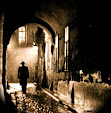
Granik shot most of the film in muted grays and blues, and this dour color palette, along with the handheld camerawork and Dickon Hinchcliffe’s original score, helps to build an almost constant feeling of dread. As Ree delves into the local underworld of trailer park chemists and speed freaks, Granik succeeds in building the kind of menacing, trust-no-one atmosphere that’s usually only found in suspense and horror films—and to great effect. The missing person case at the center of the story has led many to compare Winter’s Bone to a noir detective film—Daniel Woodrell, on whose book the film is based, is known to refer to his writing as "country noir"—and this is true enough. It views that genre through the prism of the Ozarks in the same way that a movie like Brick used a high school setting. But along with the detective story, Winter's Bone makes heavy use of horror tropes, particulary in the way that it builds tension and makes use of mystery. It has just as much in common with Last House on the Left as it does The Big Sleep, especially by the time we get to a late scene involving a chainsaw.

As in many horror films, certain players are often mythologized and built up by other characters long before they’re actually shown onscreen. It’s a classic technique for building tension and a sense of foreboding, and Granik plays it to perfection, especially in the case of Teardrop (John Hawkes), Ree’s meth-addicted, caged tiger of an uncle. With his jailhouse tats and his mercurial, just-as-soon-kill-you-as-look-at-you demeanor, it’s Hawkes who’s the film’s most memorable character, and Granik honors him by giving him a wonderful, hauntingly unresolved last scene. He’s nearly matched by Jennifer Lawrence, a 19-year old actress whose previous major credit was, of all things, The Bill Engvall Show. She brings a quiet dignity to Ree that is unusual for someone of her age to be able to pull off, and whether she’s skinning squirrels, chopping wood, or acting as a caretaker for her two young siblings and her mentally ill mother, she always seems totally authentic. Likewise, her command of the grit and flow of the backwoods dialect seems effortless, especially when compared to the kind of “aw shucks, ya’ll” histrionics so many Hollywood actresses seem to fall prey to when they try to go full redneck.

It’s this kind of attention to detail that helps Winter’s Bone maintain a veneer of authenticity, even in the cases where the set design seems all too staged. In many scenes, the filmmakers seem to be going out of their way to achieve a sense of realism through decoration—every coffee table is perfectly littered with crack pipes, guns, beer cans, and spent cigarettes, and every yard seems to have just one too many cars up on blocks—but it’s actually their excellent attention to character interaction that ends up getting the job done. See the way Ree’s neighbors, knowing she and her siblings are hungry, bring over some spare deer meat for them to eat (and after Ree had previously admonished her brother by saying “Never ask for what oughta be offered”), or a wonderful scene between Ree and a benevolent Army recruiter. In each case, Granik succeeds in building a world that operates by its own rules, moral codes, and blood ties, and it’s through this that a true sense of place emerges. After all, classical detectives like Sam Spade never invoked the name of a common cousin, or spoke about how he and another character “share some of the same blood,” as a means of getting the information he needed. In Winter’s Bone, these ties serve as their own kind of currency.

This intricate network of familial connections and sense of community—however perverted it may be—are the most interesting things on display here, and they definitely help to overshadow the film’s faults—particularly the ending, which, save for the possible fate of one key character, is a bit too easy. Still, there’s very little in Winter’s Bone that isn’t earned, and despite its generic trappings, there isn’t an exploitative moment on display here. The attempts at realism certainly aren't among its strengths, but that's not the point. It works precisely because of the familiarity of its story. If there's any transcendence to be found in Winter's Bone, it's in the ways that a universal tale—the gumshoe on the trail of the missing person—is reinterpreted by such an exotic environment.

Tuesday, July 6, 2010

The Eclipse (2009)


The theme of being haunted is pervasive in The Eclipse, a beguiling Irish film from director Conor McPherson. It’s likely to be categorized as a horror film—and with good reason—but the hauntings on display here are more than just supernatural. Characters are plagued by memories, grief, romantic encounters, and guilt, and that emotional horror often proves to be just as gripping as the more classic “gotcha” moments, which are few in number but always unexpected and remarkably effective. The result is a horror film in the vein of Roman Polanski’s The Tenant or Repulsion, a story where the terror is borne not out of violence or visceral shocks but out of character, conflict, and emotional stress.

The Eclipse’s main character is Michael Farr (Ciaran Hinds), a wood shop teacher from a stormy village on the Irish coast. Farr has yet to come to terms with the death of his wife a few years earlier, but he busies himself with his two young children and his work at the town’s annual literary festival, where he volunteers as a driver. When the film opens, Farr begins dealing with another kind of specter in the form of his wife’s invalid father (who, by the way, is still alive), whose ghost begins to manifest itself inside his house and in his dreams. He finds the perfect counsel for his problems in Lena Morelle (Iben Hjejle), a popular writer of ghost stories who is in town for the literary festival. Their relationship flourishes thanks to their shared experience with the paranormal, but it’s complicated by the presence of Nicholas Holden (Aiden Quinn), a bestselling American writer who claims to be “haunted” by a brief affair he and Lena had months earlier.

Director Conor McPherson’s background is in the theater, but there is nothing stagey or stuffy about The Eclipse. Playwrights have a tendency to attempt to accomplish too much through dialogue, but McPherson’s approach is nothing if not uniquely cinematic. He lets his exposition build through small character actions and sly uses of set design, and his camerawork is entrancing, full of luxurious tracking shots and morbid framing that often recall Kubrick’s The Shining. The film’s moments of pure horror are few and far between, but when they come they are genuinely terrifying, thanks in no small part to some chillingly effective sound design. Still, McPherson’s boldest stylistic choice is the way he refuses to conform to any kind of traditional generic construct. He has a very particular story he’s trying to tell (specifically, the ways in which people choose to confront and move past grief) and he has no reservations about using everything from drama, horror, romance, and even slapstick comedy in order to get at it.

McPherson’s cause is no doubt helped by the exquisite trio of actors he has at the center of the film. Hjejle and Quinn are both wonderful, especially Quinn, who is clearly having a great time playing the pompous Holden. He’s a character we’d love to hate, but Quinn brings an emotional truth to the role that complicates any easy conclusions we might like to form about the kind of man he is. Still, this film ultimately belongs to Hinds, the wonderful Irish character actor who is a reassuring presence in any movie in which he appears. He’s an intimidating figure, but he brings a gentleness to Farr that is completely disarming, and this helps him succeed in gaining the audience’s trust right from the start. Any time you have a horror film with a genuine emotional core, it’s easy for the attempts at suspense to feel out of place, or worse yet, to cheapen the drama. But Hinds is so believable and so genuine that his performance manages to heighten everything around him.

At scarcely an hour and thirty minutes long, The Eclipse doesn’t waste a single scene. Its emphasis on character over plot is likely to lose some viewers, but those who are able to adjust to the story’s peculiar rhythms will be entranced. It’s structured like a great short story in the way that its characters, themes, and style are all so expertly intertwined. But at the same time there is a distinctly mysterious, evasive quality to the ideas it presents (like the provocative notion of a person’s ghost appearing prior to their death), which only seems to grow in complexity and meaning after the story is over. You’re not likely to be able to get The Eclipse out of your head easily—it’s the kind of film that will haunt you.

Thursday, July 1, 2010

Collapse (2009)


One of the most ubiquitous types of modern documentary is the “everything you know is wrong” movie. These are films which shun any attempt at objectivity in favor of giving a very specific viewpoint, usually in the vein of explaining just how screwed we all really are. We’ve already had movies about how our government is corrupt (No End in Sight), our economy is broken (IOUSA), our food is toxic (Food, Inc.) and our lives are controlled by private interests (The Corporation), and that’s just to name a few. Now comes Collapse, the most recent documentary from the director Chris Smith (American Movie), which synthesizes all these arguments into one Grand Unified Theory of paranoia about just how severely our modern world is under attack from forces beyond our control. It’s definitely some heavy stuff, but it’s also endlessly fascinating. Not only does Smith give us a stunning primer on the major problems facing the 21st century, but he also provides us with an intimate portrait of a man on the edge, a modern day street preacher whose obsession with saving the world seems to constantly be at odds with his own wellbeing.

That man is Michael Ruppert, a former L.A. narcotics cop who’s well known in certain online circles for his work as an investigative reporter/conspiracy theorist (depending on who you ask). A chain-smoking everyman with a bad comb over and a few extra pounds on him, Ruppert has made his name thanks to an investigative newsletter and website he ran called From the Wilderness. From predicting the financial crash to breaking the story of the cover-ups surrounding the death of Pat Tillman, Ruppert has been on the cutting edge of the underground news cycle for several years—something he claims has made him public enemy number one of the powers that be. Considering Ruppert and the film’s basic hypothesis—that overpopulation combined with a looming energy crisis and the illusory nature of the financial system is likely to lead to large-scale societal collapse—this probably isn’t all that surprising.

Make no mistake—Collapse is Ruppert’s movie. The entirety of the film’s original footage consists of one long Errol Morris-style interview with him. As Ruppert expounds on his theories about peak oil, government corruption, and the looming collapse of the financial system, Smith uses stock footage and charts and graphs to articulate his points, along with black and white intertitles (“OIL,” “ELECTRICTY,” “COMPOUND INTEREST,”) to help organize the monologue. Ruppert’s theories are certainly provocative, but the majority of his argument shouldn’t come as a surprise to anyone who’s spent more than a few hours trawling the internet. What’s really compelling about Ruppert is the way he’s able to synthesize all of these issues (his take on the financial system, for example, is as succinct as it is devastating) and convincingly explain what their long term effects might be. Smith’s film doesn’t go out of its way to fact check anything he says, but it’s easy to see why Ruppert might intimidate those in power: he’s scary-articulate, well-read, and comes from a respectable family of former military/CIA workers. He’s the kind of guy you’d like to write off as a crank (and many people have), but he’s just so damned erudite, so rational even when presenting his most bizarre theories, that you can’t avoid letting at least some of his ideas seep into your subconscious.

It’s no surprise that Ruppert’s personal character helps dictate how you interpret his message, because at it its heart, Collapse is nothing if not an in-depth character study of a man who has dedicated his life to signaling the alarm about where he believes our planet is headed. It’s especially telling that Smith includes no other interviews outside of Ruppert. None of his critics are given the space to rebut him; none of his ideas are backed up by scientific testimony. It’s just Ruppert. And even though he’s a compelling interview, you can’t help but begin to think that Smith is giving him just enough rope to hang himself. Early in the film, Ruppert is unflappable, listing off bullet points and quoting scholars and scientific facts as though he’s reading them from a book. But as the film progresses he starts to loosen up a bit. His rant becomes more profanity-laced; he smokes more; he even cries on camera. Whether this was a natural progression or just a bit of clever editing on Smith’s part is hard to say, but it is incredibly revealing. We start to see just how personally invested Ruppert is in his quest. By this point we’ve already learned about the sacrifices he’s made in its service (he claims to have been shot at; his office has been burglarized; he’s been harassed; and we’re told he’s in financial trouble), but it’s when we begin to realize the psychic toll it’s taken on him that it becomes clear that Collapse is really more about the man than it is the message. Ruppert’s theories of societal collapse may or not prove to be true, the filmmakers seem to be saying, but there’s no denying that its effects are already far too apparent in his own life.

Tuesday, June 8, 2010

"A Memory of a Memory": The Secret in Their Eyes (2009)


If there’s one thing the movies have a unique capacity for conveying, it’s memory. Whether good or bad, recollections of the past tend to stress the emotional, the visual, and the visceral—often at the expense of the truth of what really happened—and what more concise summation of the cinema is there than that? In its better moments, director Juan Jose Campanella’s The Secret in Their Eyes proves this sentiment quite elegantly. This is a film that is haunted by memory; a film where the triumphs, tragedies, and missed chances of years prior serve as the backdrop for a mystery that has burdened the characters and helped shape the people they’ve become when the story opens. The main character’s decision to reach into the past and try to get closure makes for some truly compelling, wonderfully cinematic drama, and it’s only the filmmakers’ compulsion to neatly tie up every loose end—to remember every detail—that ends up making it all just a bit too clever for its own good.

The film follows Benjamin Esposito (Ricardo Darin), a retired Argentine court officer who reopens a long-abandoned case with an eye toward writing a novel about it. Through some excellently framed flashbacks, we’re taken back to 1974, when then-federal justice agent Esposito was assigned to the rape and murder of a young schoolteacher. Campanella has a gift for plotting the police procedural aspects of the story, and it’s entrancing to watch how the young Esposito, along with his supervisor, Irene, and his perpetually drunk colleague, Sandoval, got sucked into the case. As the evidence piles up, the story unfolds as part thriller, part fugitive chase story, and (rather unnecessarily) part history of Argentina’s transformation into a military dictatorship. Throughout it all, the film continually flashes back to the present day, as Benjamin tries to consult Irene, now a judge, on his book, all the while skirting around the prospect of rekindling the latent relationship they let slip their fingers years before.

The Secret in Their Eyes
was the surprise winner of last year’s Academy Award for Best Foreign Language film, and it’s easy to see why: it’s got the slick production values of a Hollywood film (Campanella is best known for directing American dramatic television) and a nuanced, literary story adapted from a book by Eduardo Sacheri. But where the film really succeeds is in the powerful performances of its main actors. The most prominent is surely Ricardo Darin, a renowned actor who seems to be Argentina's answer to George Clooney, but he’s matched by Soledad Villamil, who plays Irene with a tenderness and intelligence that helps her steal more than a few scenes. As Sandoval, the excellent Guillermo Francella is often used for comic relief, but his performance is helped by the script, which provides more than a few scenes that elevate him from just the boozy office jester to perhaps the most sympathetic, tragic character in the whole of the film.

Campanella, who is otherwise a bit guilty of making his presence known with his flashy camerawork, allows these great performances to speak for themselves. You could easily picture a lesser production having a stilted narration to help describe the emotions Esposito experiences during the lengthy flashbacks, but Campanella is confident enough to let his actors tell us all we need to know with awkward pauses, nervous laughs, and fleeting glances. This is especially true of the platonic romance between Irene and Esposito, both in the flashback scenes and in the present day. It’s to Darin and Villamil’s credit that they’re able to make the regret of the years spent longing for one another feel palpable—and even with some pretty egregious old age makeup holding them back.

The Secret in Their Eyes moves along like a dynamo during the flashback scenes, and while they’re still building, even the present day stuff doesn’t feel intrusive. But like so many films that start in medias res, it is a little jarring when the tale set in the past reaches its peak and the audience suddenly finds itself thrust back into the present day. It’s a tough way to plot any story, since the writer is essentially forcing two separate endings into the same script. Ironically, things here aren’t helped one bit by the fact that the climax to the flashback story seems entirely fitting and complete. Once we’re left with just the present day story, Campanella tries to get around any dramatic letdown by saving his biggest and most absurd plot twist for the last few minutes. You’re not likely to see it coming, but you are likely to think it belongs in a different movie.

Fortunately, this tendency is only peripherally present for the rest of the film, and whenever the plot drifts too perilously close to more tired dramatic territory, it’s saved by its performances and it’s director’s unabashed love for visual storytelling. For better or worse, Campanella never wastes an opportunity to embrace a filmic moment, whether an engrossing (though admittedly far-fetched) interrogation scene, or a foot chase at a soccer match that unfolds through a mesmerizing, 5-minute long tracking shot that, no doubt with the aid of some digital stitching, moves from helicopter shot, to crane shot, to steadicam—and all in the middle of a packed stadium of extras. Does such a sequence have any right showing up in this kind of movie? Probably not, but like so much of The Secret in Their Eyes, there's also no denying that it's engrossing, classically entertaining filmmaking.

Sunday, May 30, 2010

Dennis Hopper and the "Russian Suicide Chair"

As a tribute to the recently departed Dennis Hopper, here he is in 1983 performing a stunt sometimes called the "Russian Suicide Chair." The idea is that if you set up dynamite in a perfect circle and blow it all up at the same, the explosions create a safe zone in the middle where a person can sit and be unharmed. It's a perfect example of the one of a kind character we just lost in Dennis Hopper. The explosion is at 1:50 if you just want to skip to the good stuff.

Thursday, May 27, 2010

Gangster Theatre: 44 Inch Chest (2009)


Malcolm Venville’s directorial debut 44 Inch Chest plays like a 70s British gangster movie that’s been converted into a stage play. Save for the opening scenes and a few flashbacks, the film takes place almost entirely in a rotting building on the wrong side of London. Spurned car dealer/gangster Colin Diamond and four of his friends have gathered there with the intention of torturing and killing Diamond’s estranged wife’s boyfriend, who they’ve kidnapped from a posh downtown restaurant and stuffed in a wardrobe. But the overemotional Colin, still reeling from being dumped by the love of his life, is hesitant to do the deed, and needs some psyching up from his pals. This sets the stage for some of the most delightfully profane criminal shop talk since Sexy Beast (which, as it so happens, was written by the same duo--Louis Mellis and David Scinto), all of it delivered by an all star cast of British talent including Ray Winstone, Ian McShane, Tom Wilkinson, Stephen Dillane and John Hurt.

Like the best of David Mamet’s work, the high points of watching 44 Inch Chest (the title is never explained, but it somehow just feels right) all stem from seeing these great actors deliver such powerful language. Part of what made Sexy Beast such a perverse joy to watch was the way Ben Kingsley was able to wield dialogue like a weapon, spitting out insults and expletives like they could make a visceral, physical impact. Mellis and Scinto achieve a similar feat here, especially thanks to Dillane and Hurt, both of whom really seem to be enjoying themselves as the two more unbalanced members of the crew, Mal and Old Man Peanut. Wilkinson plays Archie, the straight and narrow of the group, while the always wonderful McShane is slyly funny as Meredith, a gay high roller with an ultra-cool demeanor and impeccable sense of style.

These characters all fall into neatly framed archetypes around the emotionally shattered Colin, who’s played with an endearing desperation by Winstone. In fact, enough of the film takes place in Colin’s head (in flashbacks and fantasy sequences) that it’s tempting to hypothesize that his buddies might not exist it all, but rather work as projections of his own fractured personality. Either way, they all form a great group dynamic, and their rambling dialogue, which tackles everything from Meredith’s sexual proclivities (Peanut makes a point of regularly calling him a sodomite) to the biblical tale of Samson and Delilah, ultimately forms one of the more elegant explorations of masculinity that has been offered up at the movies in some time. It’s rare that you get a movie that goes this deep into the emotional and romantic troubles of such hardened characters, and the fact that it’s coming from such an unexpected source makes a lot of the more tender dialogue have that much more of an impact.

This colorful dialogue and excellent grasp of character and theme is no doubt what drew such exceptional talent to this film, and rightfully so. But where 44 Inch Chest suffers is in the way of plot. All the great language and character dynamics can only take you so far--at some point we need to see these people actually do something. Throughout the film I kept thinking about what a wonderful play this story would make: take 5 total badasses, put them on a stage, and let them devour scenery for ninety minutes. Unfortunately this same approach doesn’t work so well on screen. We need to see these characters act on the impulses they set up so elegantly through dialogue, but director Venville never gives them the chance. This decision relegates 44 Inch Chest to being more of a showpiece for great acting than great filmmaking, but given that the acting is so superior it’s enough to keep the movie snappy and somewhat entrancing, even at the same time that it’s all nowhere near as rounded as it should be.

Friday, April 30, 2010

That Evening Sun (2009)


One of the most celebrated stylistic devices in literature is the trick of the unreliable narrator, where the reader comes to learn that the character relating the story cannot be trusted. This kind of plot point has been translated to the movies in countless ways, but it’s most often employed in films like Fight Club, where we only learn in the last few minutes how batshit crazy our main character really is. Plot-wise, 2009’s That Evening Sun might be about as far from a movie like Fight Club as you’re likely to get, and it doesn’t even use narration. But thanks to some sly, wonderfully moving storytelling and a towering performance from Hal Holbrook, it’s able to achieve a similar effect—not through wild twists and fractured narrative, but through the revelations provided by living, believable, and tragically flawed characters whose complexities only build and unfold as the story progresses.

The film follows a man with the delightfully Southern name of Abner Meecham (Holbrook), a strong-willed, ill-tempered, 80-plus year-old Tennessee farmer who might as well be the Dixieland version of Clint Eastwood’s Walt Kowalski from Gran Torino. As the film opens, Abner’s just busted out of the nursing home he was committed to and walked the 20-plus miles back to his sleepy tract of land. He arrives to find his house inhabited by Lonzo Choat (Ray McKinnon), a local ne’er-do-well who rented the place from Abner’s son with the intention of becoming a farmer and turning life around for his wife and daughter. We’re never told just how well Choat and Abner know each other, but it’s hinted that their families have a past. Whatever the history, the two immediately clash: Abner is furious that the homestead he tended with his late wife has been taken over by a “white trash…loafer,” while Choat carries a grudge about the way he’s always been treated by Abner, whom he sees as a stubborn, bitter old man. After his son (Walton Goggins) is unable to convince him to leave the property, Abner sets up camp in some old slave quarters located in a ramshackle cabin mere feet from the main house. He and Choat start doing their best to make each other's lives miserable, setting the stage for a Southern Gothic feud that’s destined to turn violent.

The biggest pleasure of That Evening Sun is the way the narrative and the characters unfold as leisurely as the humid Tennessee afternoons depicted in the film. Each player is like an onion where the layers are slowly peeled away to reveal new traits and elements, which keeps our view of them in perpetual flux. Director Scott Teems does a magnificent job of building the drama by continually setting up character roles and then immediately subverting and complicating them. We’re led to believe that Abner represents the proud, gentlemanly Old South and Lonzo the slovenly, troubled redneck, but as the story progresses and the themes of manhood, familial responsibility and redemption start to build, we come to realize that each man is not so easily pinned down. What’s more, they’re probably more alike than either would like to admit.

This is most apparent in a key scene late in the film, where a line from Abner’s son suddenly throws into doubt nearly everything we know and believe about him and his idealized relationship with his wife (played in some artfully handled flashbacks by Holbrook’s actual spouse, the late Dixie Carter). Rarely is there a film where the viewer’s total understanding of characters and themes is so radically changed simply by the utterance of a single, seemingly innocuous line, but that is exactly what happens here. (One person in the nearly empty theater in which I saw it actually gasped aloud when they heard it.) It’s a subtle moment, and Teems, working from a short story by the celebrated writer William Gay, wisely underplays it to the point that I’m sure that no small amount of viewers will miss it entirely.

Of course, none of this would work so well if it weren’t for a universally excellent cast led by Holbrook, a criminally underrated actor who turns in what might be one of the very top performances in a long and storied career. He doesn’t deliver a false line in the entire film, and every word he speaks feels like it has the weight of a full lifetime of love, loss, and hardship behind it. Still, at the same time that Abner is a flawed and fully realized character, we are consistently—and wisely, I might add—kept at an arm’s length from him. We’re not told why he was put in the home or how his wife died for a good portion of the film, and when these revelations come, they act as the major catalyst for the way our understanding of the conflict is refigured and reinterpreted.

Holbrook gives the standout performance, but he’s nearly matched by McKinnon, a deeply talented actor whose chameleon-like qualities have established him as a phenomenal artist at the same time they’ve kept him effectively hidden from the mainstream. He’s as hyperbolically good as ever here, turning in a performance that wouldn’t have been out of place in his 2004 directorial debut Chrystal, another languidly-paced Southern drama that’s similar in tone and style to That Evening Sun. Carrie Preston is understated and touching as his long-suffering wife, while Mia Wasikowska (of Alice in Wonderland fame) has an equally interesting turn as his daughter, a shyly sweet girl whose bemusement with the ornery Abner makes for a few quite funny scenes. Rounding out the cast is the great Barry Corbin as Thurl Chessor (this film deserves an award for colorful character names), Abner’s charmingly detached neighbor. You might remember Corbin as Ellis, the cat-keeping philosopher-hermit that Tommy Lee Jones visits at the end of No Country for Old Men. He was great in that film, and he brings a similar kind of homespun wisdom and pitch-perfect diction to his role here.

Teems’ direction is unobtrusive and understated throughout—he realizes how good his cast is—but he deserves credit for the way he manages to build mood and atmosphere through his gorgeous widescreen landscape shots and slow camera moves. His fleeting cutaways during Abner’s reveries about the past are also exceptional and wonderfully staged. This preoccupation with the lyrical does make for the film’s one noticeable flaw—an ending that is perhaps a bit too unfinished for its own good—but this kind of philosophical open-endedness should always be appreciated, especially in a film that is otherwise as narratively straightforward as this. That Evening Sun is haunting, thematically complex, character-driven, and literary in the best since of the word—all of which make for an experience that is truly moving. Most important of all, though, it achieves it all without ever sacrificing one ounce of authenticity. And that, simple as it may sound, is not something you see too often.